Half-Hourly Secrets: What Your Smart Meter Actually Shares, and With Whom
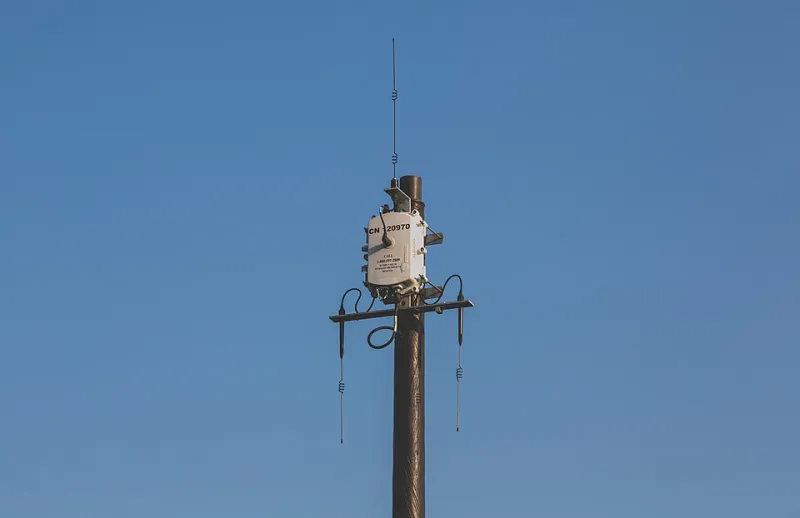
Photo: Tony Webster from Minneapolis, Minnesota, United States, CC BY-SA 2.0, via Wikimedia Commons
The in-home display has been sitting by the kettle for years now, blinking away, occasionally showing a number in pounds that nobody in the household fully trusts. Meanwhile, somewhere behind it, a meter is quietly logging your electricity use every thirty minutes and sending it down a network that has nothing to do with your broadband.
That arrangement is either the best thing to happen to your energy bill or a slightly unsettling amount of information about your tea-drinking habits, depending on who you ask. Here is what is actually going on.
What the meter actually records
A smart meter logs how much gas and electricity passed through it, in half-hourly chunks. That is it. It does not know you were running the tumble dryer rather than the oven — it knows a lot of electricity went somewhere for forty minutes.
That said, half-hourly data is revealing in aggregate. A steady overnight draw suggests a fridge or a charger left plugged in; a spike at 7pm most weekdays looks like cooking; a sudden 11kW pull every third night is almost certainly a car. Nobody is logging appliance names, but patterns can be inferred, and inferences are what algorithms are for.
The meter also stores readings locally for a while, and the in-home display is a separate gadget reading from it. The meter itself communicates over a dedicated long-range radio network run by the Data Communications Company — the DCC — not over your Wi-Fi.
The default is monthly, not half-hourly
This is the part that surprises people. Under the Smart Energy Code, your supplier gets monthly readings by default, for billing. Half-hourly data requires your consent, and consent is time-limited — broadly a year at a time as things stand in 2026 — after which it should be asked for again.
You can change your mind in either direction. Ring or message your supplier and ask what your current setting is, then ask them to alter it. Worth doing if you have never actively chosen anything since installation day.
Who is on the list
Roughly speaking, three groups can see your readings:
- Your supplier, for billing and for the sort of customer service that needs to know why your direct debit doubled.
- Your network operator, the company that actually runs the wires and cables in your area, which uses consumption data to keep the local grid balanced. It mostly works from aggregated figures rather than your specific Tuesday.
- Third parties you have given explicit permission to, usually through the DCC. That covers genuine independent apps — the sort of thing that shows you when power is cheapest — and also, in some cases, price comparison or tariff-switching services.
The important detail: your data is tied to a meter point and an address, not anonymised by default. If someone has it, they can generally work out it is your house.
The trade you are making with a cheap overnight tariff
Time-of-use tariffs are the reason half-hourly data exists in the first place. Cheap electricity in the small hours, expensive electricity at teatime, and a nudge to move the washing machine, the dishwasher and the car charging into the cheap window.
For some households this is straightforwardly good value. If you have an electric car and a home charger, an overnight rate can cut a serious chunk off your annual bill, and the app is genuinely useful for telling you when the cheap slots land.
For others it is a dud. A flat with a storage heater, a household out all day, or anyone who cannot realistically shift their heavy loads will find that the saving on paper evaporates in practice. Some of these tariffs also make half-hourly data sharing a condition of the deal — so read the terms before you sign, not after.
A word about “AI energy saving”
Every few months another app appears claiming that its algorithms will knock a fifth off your bill. Treat the percentage as marketing until proven otherwise.
Three questions cut through most of it. First, is the saving coming from the app or from the tariff? An app telling you to run the dishwasher at 2am is not saving you money through cleverness — the tariff is doing that, and any calendar reminder would achieve the same thing. Second, what is the figure measured against: last year's usage, a modelled average household, or a comparison the app itself chose? Third, who is paying for the free version? Frequently the answer is a company hoping to sell you a tariff, a boiler cover policy or your own usage insights.
Advertising claims in this space are policed by the Advertising Standards Authority, and energy pricing by Ofgem. If a claim is oddly precise, ask what it is precise about.
Keeping hold of the reins
A few practical moves, none of them dramatic:
- Find out what your supplier's data setting currently is, and change it if you have no reason to leave it open.
- List the apps with access to your meter data and revoke anything you installed for a trial and forgot about.
- Remember your data rights still apply — you can ask what is held about you, and in many cases ask for it to be deleted.
- Re-check consents once a year. They expire, but services are not always shy about nudging you to renew.
- If you take a time-of-use tariff, work out whether the load shifting is actually happening. If it is not, the tariff is costing you money.
Smart meters are not surveillance devices, and the blinking display is not a snitch. They are, however, a fairly detailed record of your daily routine, and the decision about who gets to see it should be a deliberate one rather than something you drifted into when an installer was in the cupboard under the stairs.